
If you’ve ever searched for a masonry contractor in Stockton or the Central Valley, you’ve probably seen the same materials mentioned again and again: CMU block, brick, and stone. That’s because these three categories cover the majority of modern masonry construction—especially for commercial buildings, multifamily projects, site walls, retaining walls, and custom residential features.
So when someone asks, “What are the three types of masonry?” the most common and useful answer is:
- Concrete masonry (CMU / block)
- Brick masonry
- Stone masonry
Those categories line up with how many professional masonry contractors describe their services. For example, Cen Cal Masonry positions its core expertise around CMU block/structural masonry, brick work, and stone installation, serving Stockton and surrounding Northern California markets.
Below is a clear, project-focused breakdown of each type—what it is, where it’s used, and how to choose the right option for your job.
1) Concrete Masonry (CMU / Block Masonry)
Concrete masonry typically refers to CMU (Concrete Masonry Units), commonly called block. These are the uniform, rectangular concrete blocks you see in everything from structural walls to site walls and retaining wall systems.
Where CMU masonry is used
CMU is widely used in:
- Commercial and multifamily construction
- Structural block walls
- Site walls, privacy/security walls
- Retaining walls (with appropriate drainage and reinforcement design)
Cen Cal Masonry highlights CMU work prominently, including CMU site walls and retaining wall expertise and structural masonry, which is common in commercial builds where strength, performance, and schedule coordination matter.
Why people choose CMU
CMU is popular because it’s:
- Durable and strong for structural applications
- Efficient to install on large-scale projects
- Versatile (can be reinforced, grouted, and finished in many ways)
Key considerations
For CMU projects, the quality of the outcome depends heavily on:
- Layout and alignment
- Reinforcement and grouting
- Proper detailing (control joints, connections, and finishes)
If your project involves structural walls, site walls, or retaining walls, CMU is often a top contender—but it should be installed by a contractor who regularly performs structural block work and understands the requirements tied to bigger job sites.
2) Brick Masonry
Brick masonry uses fired clay bricks (or sometimes concrete bricks) set in mortar. Brick can be used as structural brick in certain assemblies, but more commonly today it’s used for architectural finishes such as brick veneer, decorative walls, and outdoor features.
Where brick masonry is used
Brick is often used for:
- Decorative brick walls
- Brick veneer installation
- Outdoor features (like fire pits, BBQ islands, and accent elements)
- Architectural masonry details that elevate curb appeal
Cen Cal Masonry’s brick and block services include brick installation, brick veneer, and decorative brick features—use cases that are common in both residential upgrades and commercial projects that want a clean, finished exterior look.
Why people choose brick
Brick remains a favorite because it offers:
- Classic appearance
- Long lifespan with proper installation
- A strong “finished” look for storefronts, entries, and feature walls
Key considerations
Brick work is very detail-driven. Small installation issues can become very visible—especially with:
- Uneven courses
- Inconsistent joint thickness
- Poorly tooled mortar joints
- Mismatched patterns or alignment around openings
If aesthetics matter (and they usually do with brick), you want a contractor with proven experience in decorative brickwork and a portfolio that includes similar finishes.
3) Stone Masonry (Natural Stone and Stone Veneer)
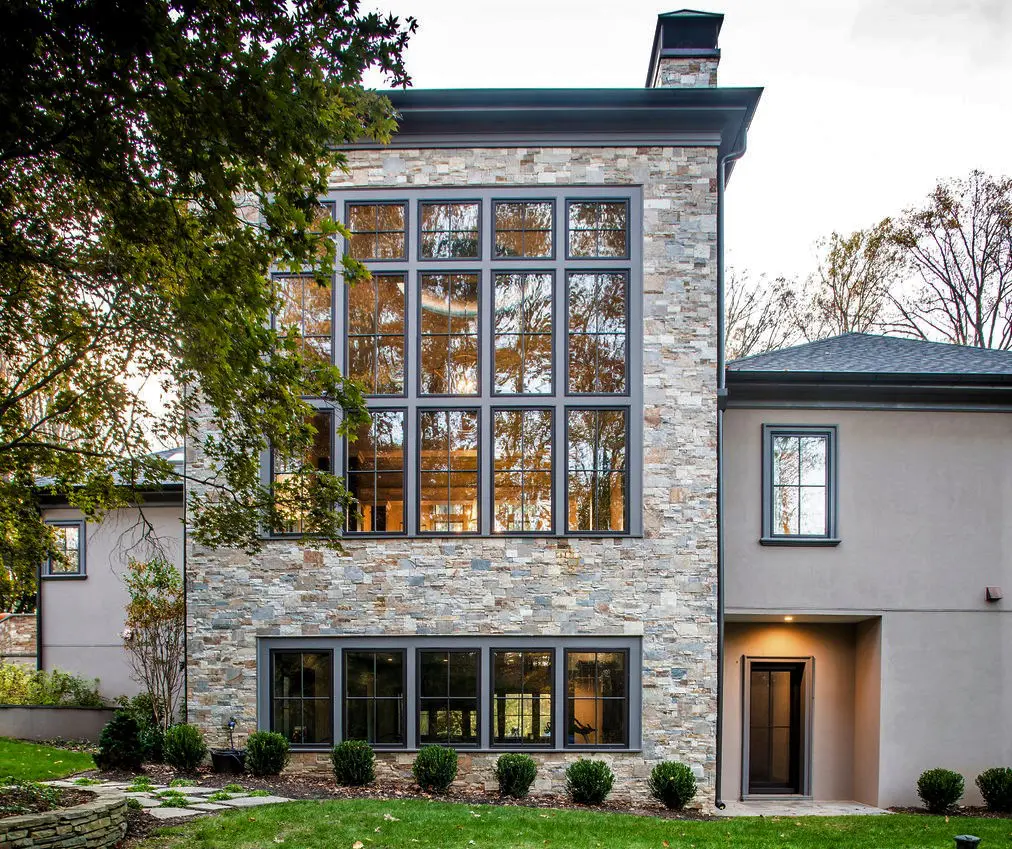
Stone masonry includes work built with natural stone as well as stone veneer applications. This is the “premium” category many people choose when they want high-impact curb appeal, outdoor living upgrades, or distinctive architectural finishes.
Where stone masonry is used
Stone is commonly used for:
- Facades and feature walls
- Stone veneer upgrades
- Outdoor living features (patios, walkways, fire pits, outdoor kitchens)
- Decorative stone accents for residential and commercial properties
Cen Cal Masonry specifically calls out natural stone installation, stone veneer upgrades, and custom outdoor features as part of its stone masonry offerings in Stockton and surrounding areas.
Why people choose stone
Stone is chosen for:
- High-end appearance
- Durability
- Timeless design value (it tends to age well visually)
Key considerations
Stone demands craftsmanship and planning:
- Material selection (shape, thickness, and consistency)
- Proper base preparation
- Precision placement and finishing
- Detailing at corners, edges, and transitions
Stone can look incredible when installed well—but it’s also the category where experience matters most, because the material isn’t as uniform as CMU or brick.
Which type of masonry is “best”?
There isn’t one “best” choice—only the best match for your goals.
Here’s a simple way to decide:
- Choose CMU / block masonry when you need strength, structure, and scale (site walls, structural walls, retaining walls).
- Choose brick masonry when you want a classic finished look that works well for veneers, accents, and decorative builds.
- Choose stone masonry when you want high-end design impact for facades and outdoor living features.
Many projects use a combination of all three—for example, a CMU structural wall with a brick or stone veneer finish.
A practical next step for Stockton-area projects
If you’re planning masonry in Stockton and the greater San Joaquin Valley, it helps to work with a team that’s clearly experienced in all three categories—CMU, brick, and stone—and can handle everything from foundations and structural walls to detailed finishes. Cen Cal Masonry describes exactly that scope, supporting commercial and residential projects across Stockton, Lodi, Sacramento, the Central Valley, and the Bay Area.
If you want, I can write the next related blog post in this series (700+ words, same style) on one of these high-intent topics:
- CMU Block vs. Brick: What’s Better for Site Walls?
- Brick Veneer vs. Stone Veneer: Pros, Cons, and Best Uses
- What Is Structural Masonry (and When Do You Need It)?